Hell’s Backbone Road: A Remote High-Country Drive in Southern Utah
It took us years, once we’d heard of it, to finally drive Hell’s Backbone Road in southern Utah’s high country. Maybe it was the use of the words hell and death in the descriptions that made us hesitate. Once we finally went, we realized our concerns were unfounded.
An alternative to State Route 12
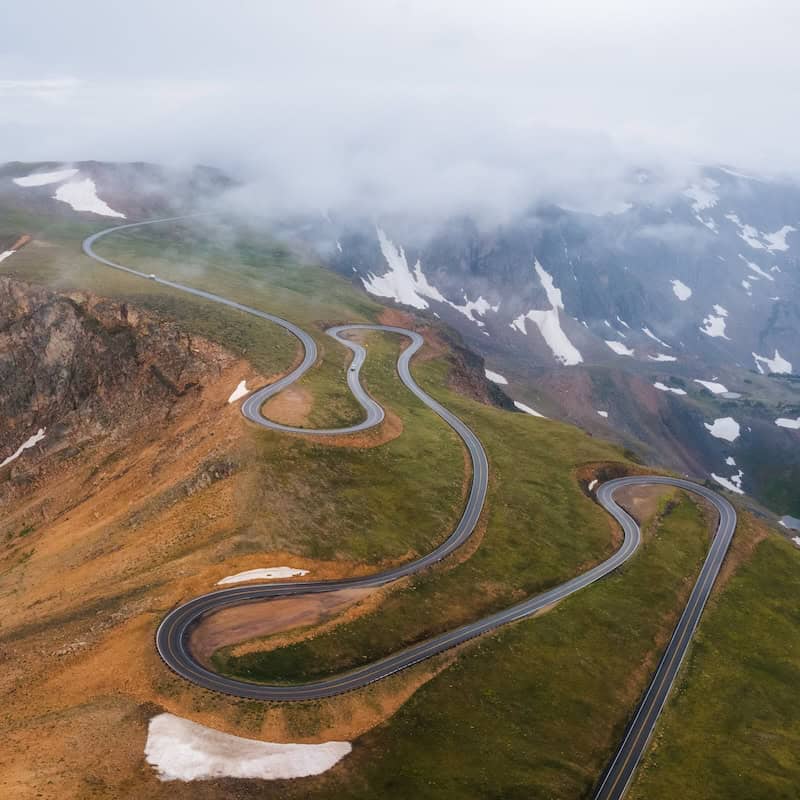
Hell’s Backbone Road is a scenic alternative to Utah State Route 12, connecting the towns of Boulder and Escalante. This 38-mile, mostly gravel road climbs into a remote landscape that sees far fewer visitors than the more popular areas to the south.
Built in the 1930s by the Civilian Conservation Corps, the road provided the first automobile connection for communities that had long relied on mule trains and rough trails. Even today, it feels isolated, with narrow stretches, tight curves, and sweeping views. As the elevation climbs past 9,000 feet, the scenery shifts from open desert to forested high country.
The bridge is the high point, literally
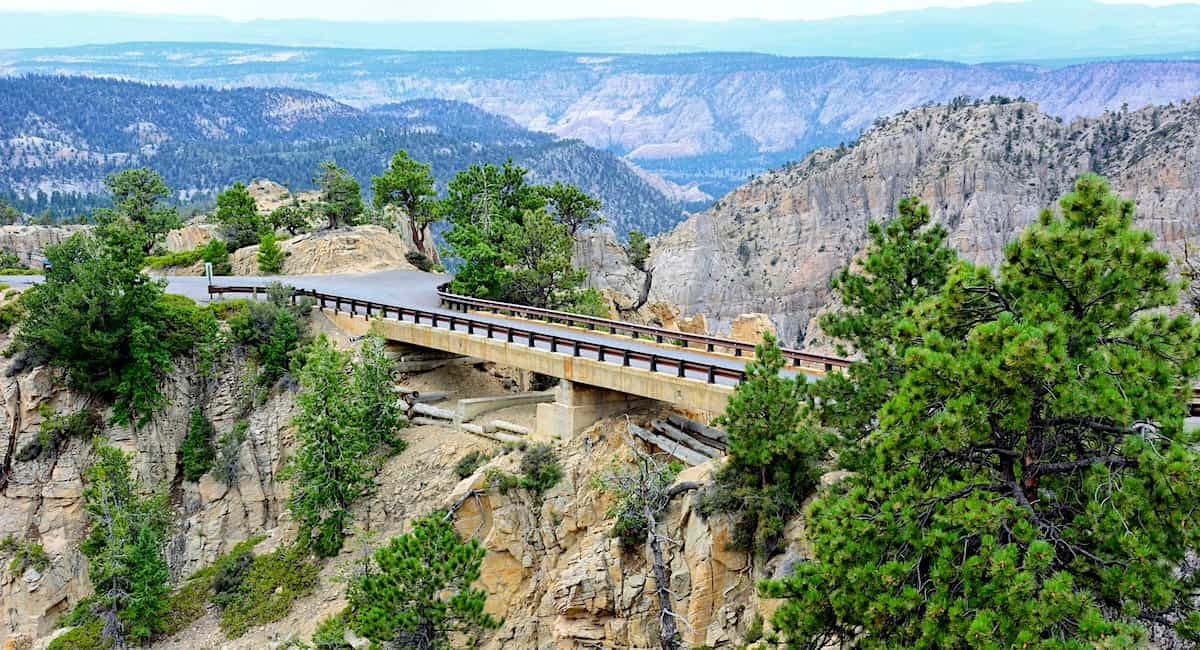
The most dramatic point along the drive is Hell’s Backbone Bridge. The narrow span crosses a thin ridge with steep drop-offs on both sides. From the bridge, you can peer into the Box-Death Hollow Wilderness, a rugged maze of canyons and slickrock.
We saw very few other cars when we drove this road. At the bridge, we parked at a pullout and walked onto the span to take in the view below. Karen enjoyed imagining the CCC workers who built these structures nearly a century ago and how thrilling that work must have felt at the time. Those workers would be proud to know that we still benefit from their accomplishments from so long ago.
While Hell’s Backbone Road is a high-country alternative to Scenic Byway 12, it’s more than that. It’s a quiet escape into the past and into a rarely visited corner of southern Utah.