Custer State Park: The Heart of South Dakota’s Black Hills
Hiking, wildlife, and scenic drives are the three biggies for us. And food. Let’s not forget finding great places to eat. We’ll drive halfway across the country to hike a great trail, sit patiently in traffic while bison mosey past our car, and happily make countless wrong turns to the middle of nowhere in hopes of seeing a jaw-dropping landscape.
When we find a place that delivers all three, we’re in our happy place. That’s why we keep returning to Custer State Park in the Black Hills of South Dakota. It checks every box we’re looking for in an outdoor destination.
Home on the range
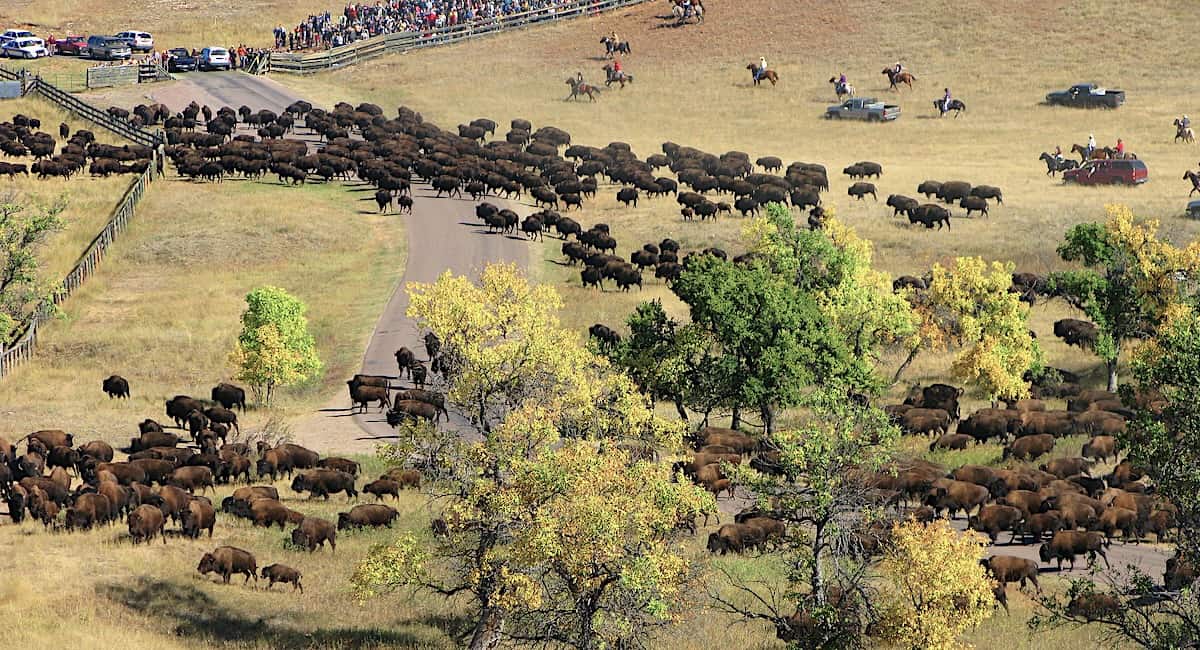
Covering 71,000 acres, the park is best known for its bison herd, which numbers around 1,400 animals. The bison are free to roam unless it’s fall round-up time, when the park brings all but the orneriest solitary males into a central corral for their annual health check.
Most of the year, they are free-ranging through the park, although we’ve had the best luck seeing them along the southern section of the Wildlife Loop Road. They cross roads, block traffic (hopefully), and set the pace for your visit. Pronghorn, elk, prairie dogs, and burros also live here.
The burros have become minor celebrities. Nicknamed the “begging burros,” they often approach cars along Wildlife Loop Road looking for snacks. The park discourages visitors from feeding them, but their curiosity is part of the park’s personality.
Scenic drives await
Scenic drives are a big part of the Custer State Park experience. The Wildlife Loop Road is the most popular and the best option for seeing animals in their natural setting. Dawn and dusk offer the most activity and fewer crowds.
Needles Highway is a slower drive that winds through granite spires and narrow passages, including the Needles Eye Tunnel. The Iron Mountain Road connects the park to Mount Rushmore and features tight turns and tunnels similar to those on Needles Highway.
When passing through the tunnels, be sure to coordinate with drivers on the other side, as there’s barely enough space for one vehicle to pass at a time. And finally, keep an eye out in the hills above for the occasional mountain goat sighting.
Water and trails
Sylvan Lake sits in the far northwest region of the park and acts as a hub for both water activities and hiking. Visitors swim, kayak, and paddleboard here in the warmer months. The easy 1.1-mile Sylvan Lake Shore Trail around the lake is a great option for families or those looking for an easy but fun walk.
Our favorite hike in the park is the trail to Black Elk Peak. We park at Sylvan Lake and hike the 6- to 7-mile trail up to the peak, which has one of the most impressive fire tower lookouts we’ve seen anywhere. This all-stone structure is built into the granite spires and offers a 360-degree view of the surrounding territory.
Bonus tip: When we have extra time, we’ll take a different route down from Black Elk Peak to add a stop at Little Devil’s Tower. While not strenuous, there is a bit of scrambling at the very end of this worthwhile side trip.
And if that’s not enough
A fun fact for history buffs: the State Game Lodge within the park was once the summer residence for President Calvin Coolidge, and later hosted President Eisenhower.
An event still in Karen’s wish bucket: Each September (typically the last weekend of the month), the park holds its annual Buffalo Roundup. Riders on horseback bring in the herd so they can be given a good once-over before releasing them back into the park. It’s the park’s largest event of the year and draws thousands of spectators.